

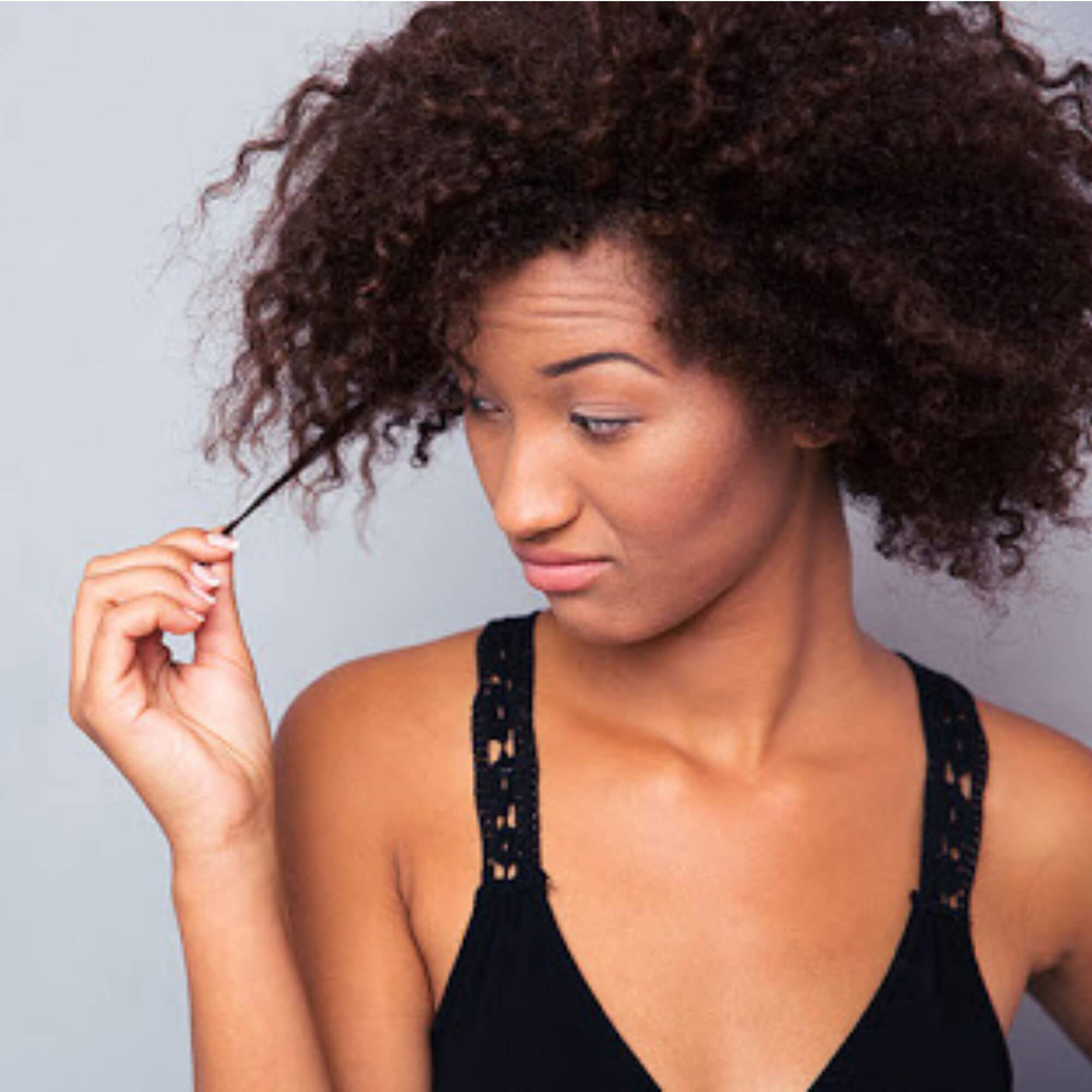
No one wants to deal with hair breakage. Nobody!. It can be tough to grow out your hair or it could just be that you love your hair, but it’s not as long as it used to be.
We’ve all been there. You’ve been styling your hair for a few days, and suddenly your hair is falling out in clumps. It’s common among women and frustrating, isn’t it?
Hair breakage is a common problem and can be a pain in the neck. Fortunately, there are ways to prevent hair breakage and treat it when it does happen.
It is not enough to dump products here and ask you to try them without addressing the root cause of your breakage.
You first need to determine if your hair breakage is caused by dryness or damage caused by hot styling tools like straightening irons and blow dryers.
If it’s the latter, you want to steer clear of those styling tools or use them minimally. Also when using heat styling tools, ensure to use heat protectant products.
Next up is figuring out what type of hair is causing the breakage in the first place. Could it be as a result of hair bleaching (colour-treated hair)? If so, then chances are that the chemicals used during colouring treatments have contributed to the breakage issues.
You might also want to consider the weather. Whatever the case may be, there are some things that you can do to help keep your hair from breaking.
Ensure your hair is well moisturized before going outside or even while getting ready in the morning. You can use conditioner or coconut oil as a treatment before styling.
And also don’t brush your hair too harshly—this can cause split ends and lead directly into breakage. Instead gently brush through your tresses as often as possible.
Get regular trims so you don’t damage the ends of your hair. You may want to explore the internet for other options.
What causes hair loss
Hair breakage can be caused by a variety of reasons. Healthy hair relies upon an outer cuticle that has the overlapping scales that help keep hair strands in place.
If these scales break hair may become dry and break off and cause damage. This can cause breakage as well as other signs, like dryness and frizz.
Find out more about the most frequent 12 hair breakage causes and how you can address the causes.
1. Diet
There’s a lot of truth to the old adage “you are what you eat,” especially in the area of the health of skin and hair.
Certain nutrients aid in hair grow and prevent breakage due to damage. Be sure to get enough iron, zinc and Folic acid in your diet.
A healthy amount of protein intake and antioxidants (found in plant foods) can help ensure that your hair is not damaged. Certain vitamins can aid in the growth of your hair.
2. Stress
There’s plenty of research that shows connections between stress and loss of hair However, it’s also well-known that stress can trigger hair loss.
Telogen effluvium is an alopecia common due to stress, which is which is most likely caused by hair loss. Stress causes hair follicles to become dormant, and hair in the middle of the growth cycle can break. There is a possibility that hair from the past will falling out too.
The stress you manage can cause in better hair.
3. Dryness
Hair loss due to dehydration could constitute one of the causes to breakage and damage.
It could be caused by several reasons, including dry weather, low humidity as well as excessive heat. Make sure to make use of warm, not hot water for washing your hair – this can cause more drying.
If your hair ends are dry, you should concentrate your shampoo only on your scalp. The conditioner should be left out. an offence. You might want to try applying a hair mask to the middles and ends the hair.
If you’re in a hurry spray an leave-in conditioner prior to combing your hair wet.
4. Heat damage
It is helpful to have a high-temperature setting to achieve the most effective result from using your hairdryer, flat iron and curling iron. However, if you utilize these tools improperly or excessively it could damage the cuticle with extreme temperatures.
One method to avoid the damage caused by heat will be giving your hair an opportunity to get away from hair styling equipment at least once per week. To limit the harm caused by your styling tools opt for ceramic onesThey heat more evenly, meaning you won’t need to apply them to the same areas of hair.
It’s also crucial to shield your hair prior to when applying the high temperatures. Apply a spray that is heat-protective to prevent the damage.
5. Over-processing
Relaxers, perms professional straightening, coloring may make your hair appear healthier after the first or two sessions. However, if you use these procedures regularly, your cuticle may be damaged and cause damage to hair.
Permanent hair dyes may also be a source of irritation for your scalp, and could cause contact with dermatitis.
It is recommended that the American Academy of Dermatology (AAD) recommends that you extend the interval between sessions to 8 to 10 weeks, if you can. If you aren’t able to, consider an emollient to help prolong the results.
6. Over-washing
If you’re prone to oily skin, you’re more likely to have excessive sebum (natural oil) production on your scalp. This could result in the desire for you to clean your hair more frequently than you should.
While regular washes aren’t as delicate and delicate, you shouldn’t shampoo your hair several times each day if you have oily hair. In contrast, hair that is dehydrated may require only a weekly shampoo.
Also, make sure you wash your hair gently and apply conditioner evenly starting at your ends and ending at your hair roots.
7. Drying towels improperly
As you exit the shower and walk out of the shower, it’s natural to rub a towel over your hair and skin. But, this motion causes damage to your hair when it’s the most susceptible (after getting wet).
Instead of rubbing the water out of your hair, simply blot an absorbent towel over you hair. It is also possible to leave the cloth in your hair for a short time to soak up excess water.
8. Elastic hair ties
Elastic hair ties are essential to keep hair from getting in your face when you exercise. Let’s be honest, they may help in useful on bad hair times as well when in the middle of a rush.
The issue with hair ties is that they pull upon your scalp and cuticle. There is a chance that hair fall out whenever you pull your ponytail back.
You can remedy this issue by putting your hair down for a few minutes in the course of time or by altering your hairstyle so it is looser so that it doesn’t pull your hair as excessively.
Make sure that you’re wearing hair ties that are real and not rubber bands that could damage hair.
9. Uncorrect brushing and combing
There’s a chance the idea that in fact, brushing hair with 100 strokes every day is great to your hair however the AAD claims that this is an untruth. They recommend you just brush and comb when making your hair.
A study conducted in 2009 concluded that less frequent brushing decreased the loss of hair in women.
Be sure to use broad-tooth combs to avoid breaking. It is also recommended to make use of a brush only when your hair is dry and you should avoid using bristles made of plastic. Make sure to use a brush made of the natural bristles.
10. Hair trims are not cut properly
It could be a bit scary to think that cutting your hair could damage it. However, trimming your hair can help to keep your hair in good shape and free of split ends.
Think of a trim for your hair as akin to exfoliation of the skin -in both cases, in both cases it is possible to get rid of some old cells to allow new ones to grow. If you’ve split ends, the splits in the cuticle may extend across the hair’s length, and could cause breakage.
Visit your stylist every 8 weeks, based on the length of your hair as well as hair texture. Even if you’re growing your hair, cutting damaged ends may stop further damage from occurring.
11. Hypothyroidism
The condition known as hypothyroidism (low thyroid disorders) is in the case that your thyroid gland isn’t able to create adequate thyroid hormones. While the thyroid isn’t huge but it plays a major function in maintaining your body’s functioning. This includes your heart rate, metabolism and hair growth.
The thyroid of those with low levels may be noticing excessive hair damage and loss, particularly in bathing or when brushing. Ask your physician for a thyroid exam when you notice damaged, dry hair that is coupled with low energylevels, sudden weight gain, or depression.
12. Eating disorders
Hair damage can be a sign that you or someone close to you suffers from the disorder of eating.
This is because certain eating disorders lead to malnutrition like anorexia or the bulimia nervosa. In these instances, hair follicles aren’t able to absorb the nutrients they require to grow new hair and the process ceases entirely. It is possible to notice hairs that fall out in between the growth cycle.
Disorders of eating can cause further severe effects and require medical attention. The personal stories of people who are overcoming eating disorders can be a good way to motivate the loved ones to get treatment.