

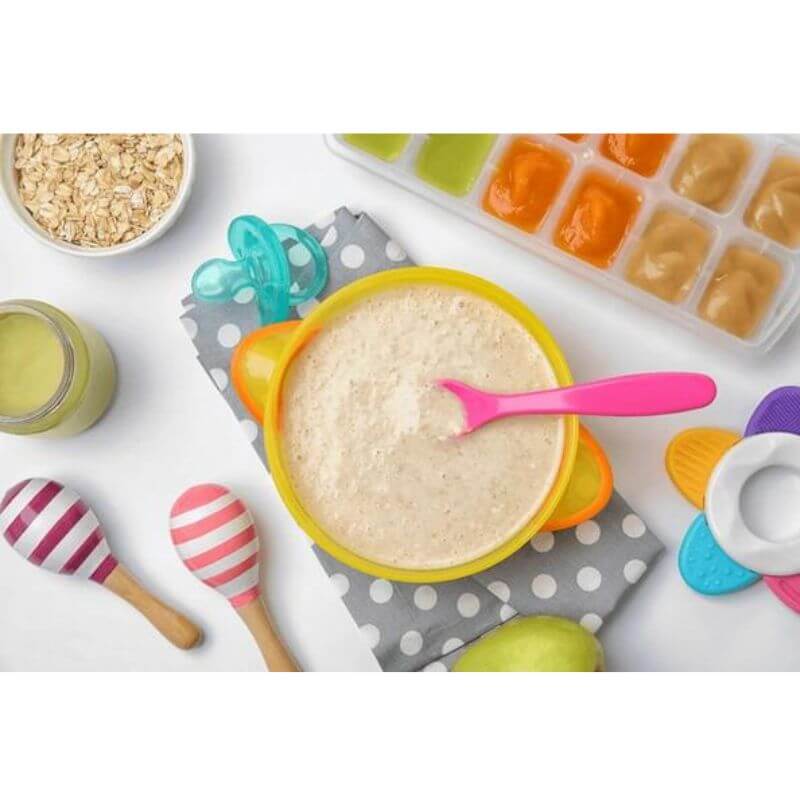
One of the most common questions new parents have is how thick baby cereal should be when introducing solid meals to their kids.
This issue has no conclusive answer because individual babies’ tastes and capacities to swallow and digest solid meals vary. However, some broad recommendations might assist you in making the best option for your infant.
The first thing to consider is your baby’s age. Most experts advocate waiting at least four months before giving solid meals to your kid since their digestive system and oral motor skills are only completely developed then.
Source: Emma Hubbard
- Take an interest in food and observe how you eat.
- When food is presented, they open their mouth.
- They are keeping their head up and sitting with help.
- They must have adequate tongue control and refrain from pushing food out of their mouth.
- They can move food from the front to the rear of their mouth and swallow it.
If your baby exhibits these symptoms, give them tiny quantities of cereal mixed with breast milk or formula. The cereal should be very thin and runny, almost like a liquid. You can use a spoon or a bottle with a large hole to feed your infant. Begin with one or two teaspoons of cereal once daily, gradually increasing the amount and frequency as your baby becomes accustomed to it.
You may progressively thicken the consistency of the cereal as your baby grows and develops by adding less liquid. Other cereals, such as oats or barley, and pureed meals, such as fruits, vegetables, and meats, can also be introduced. Your baby should eat various meals with varying textures and flavours by six months.
The thickness of the cereal should be determined by your baby’s preference and capacity to swallow and digest it. Some babies like thinner food, while others prefer thicker cereal. Some babies struggle to swallow thicker cereal, but others require more texture to stimulate their chewing and swallowing muscles. You can try different consistency combinations to find the best for your child.
The most essential thing is to pay attention to your child and go at their pace. Please do not force your infant to eat more than they want or need or to consume foods they do not enjoy or are not ready for.
Allow your infant to explore and enjoy food safely and enjoyably. Remember that breast milk or formula should be your baby’s primary source of nourishment until they are at least one year old and that solid meals are a supplement, not a replacement.
Finding the ideal consistency for your baby’s cereal is a long and unique process. If you have any questions or concerns regarding how thick baby cereal should be or how to introduce solid meals to your baby, you can seek guidance from your physician or a certified dietitian.
They can help you develop a customized feeding plan that suits your baby’s requirements and preferences.